
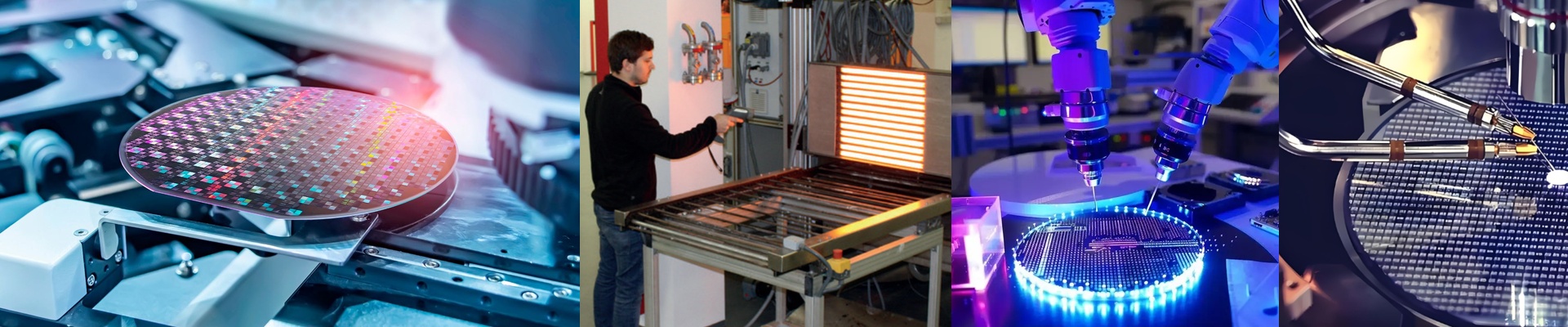
Making bio-sensors is a delicate game. You need your thermal profiles to be spot on. But here’s the problem: one tiny voltage leak or a flaky piece of insulation in an IR lamp can wreck an entire batch of substrates. Or worse, it trips your breakers and shuts everything down. That’s why we don’t do “batch sampling.” We don’t just test a few and hope for the best. Every single tube that leaves our shop goes through a full dielectric and insulation resistance gauntlet. The “Stress Test” We put every lamp through a high-voltage stress test. We’re looking for the tiny things—microscopic cracks in the quartz or a seal that isn’t quite tight. If there’s a flaw, the current will arc. It’s much better for that to happen on our floor than in your machine. We catch the failures here so you don’t have to deal with a short circuit the moment you plug into your power supply. Why this actually matters If you’re working in bio-fab, you’re probably dealing with conductive chemicals or a lot of humidity. That’s a recipe for leakage current. When that happens, you get electrical noise. It messes with your sensor calibration and turns a precise process into a guessing game. By sticking to strict Megohm thresholds during our quality checks, we make sure the lamp behaves exactly how it should. No surprises. The balancing act Now, there’s a trade-off. Pushing high voltage during testing can be hard on the seals where the quartz meets the metal. To fix that, we use specific sealants that can handle the constant heating and cooling of IR cycles without cracking under the pressure of our tests. You get a lamp that’s stable and reliable. Just make sure your housing is grounded properly to handle any static buildup when you’re running at high wattage. We ship these ready to go. Just drop them in, and you can get back to work knowing your gear is safe and your process is steady.