


Why We’re Moving to Infrared for Semi Processing
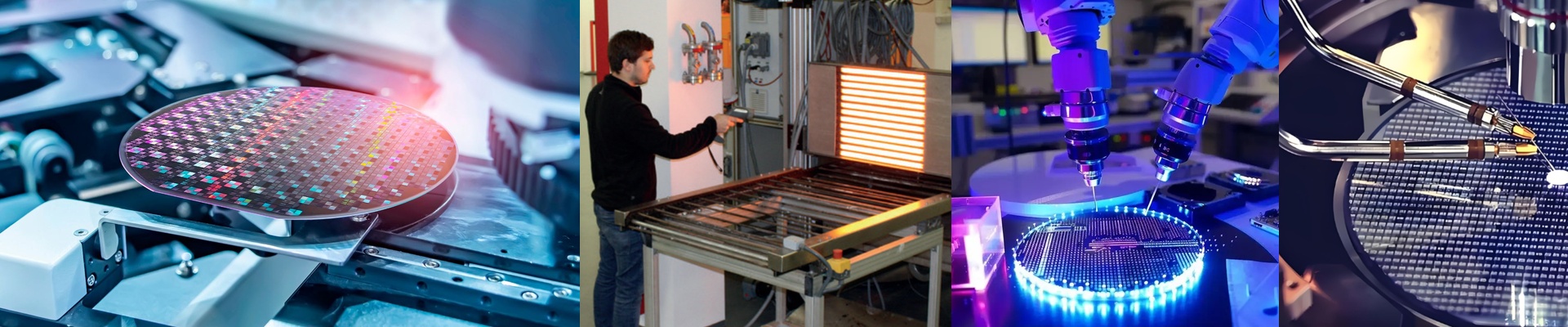
For a long time, we’ve just accepted that hot air circulation is the way to go for heating semiconductors. But let’s be honest: it’s slow. Air is a terrible conductor. You end up sitting there for minutes just waiting for the air to get hot, and then you wait even longer for that heat to actually soak into the wafer. It’s a total drag on the clock. Cutting out the middleman Infrared (IR) does things differently. Instead of heating up the air to heat the part, IR uses electromagnetic radiation to dump energy straight into the material. It’s almost instant. You flip the switch, and the heat is just… there. No more staring at a chamber waiting for it to “warm up.” Saving space (and sanity) If you’ve ever walked a floor with air circulation systems, you know the drill: massive blowers, endless ducting, and those huge insulated boxes just to keep the heat from leaking everywhere. They eat up way too much real estate. IR lamps let us shrink everything down. Since we’re aiming the energy right at the workpiece, we aren’t wasting power heating up the rest of the machine’s chassis. It’s leaner and way more efficient. The catch Now, it’s not a magic wand. You can’t just swap one for the other and call it a day. IR is all about line-of-sight. If your part has weird shapes or deep nooks and crannies, the radiation can’t reach them. You’ll end up with cold spots. You have to be really intentional about where those lamps go to make sure everything gets hit evenly. Plus, IR hits hard and fast. Your sensors need to be dialed in perfectly, or you’ll overshoot your target temperature before you even realize what happened. The bottom line At the end of the day, this is all about throughput. When you can shave a few seconds off every single cycle, it adds up. More wafers per hour means the entire math of your production line shifts in your favor.