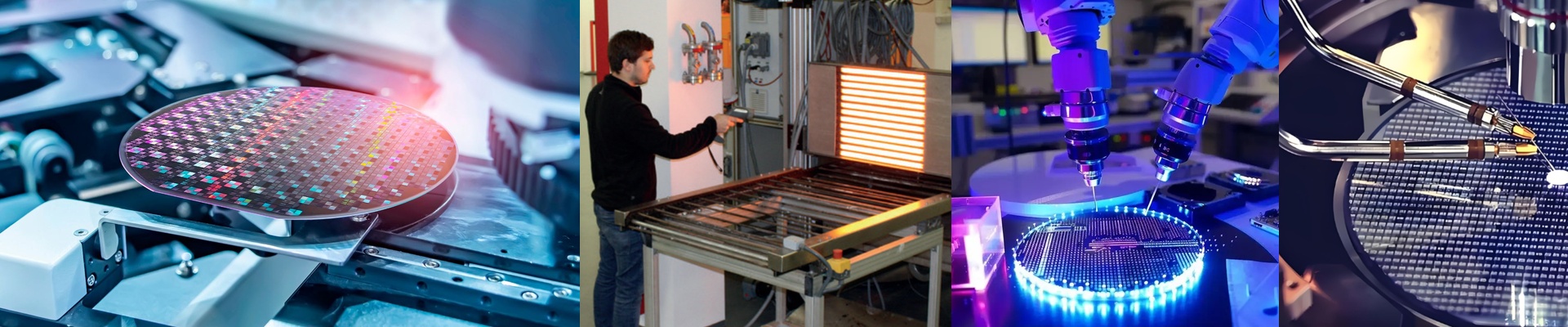

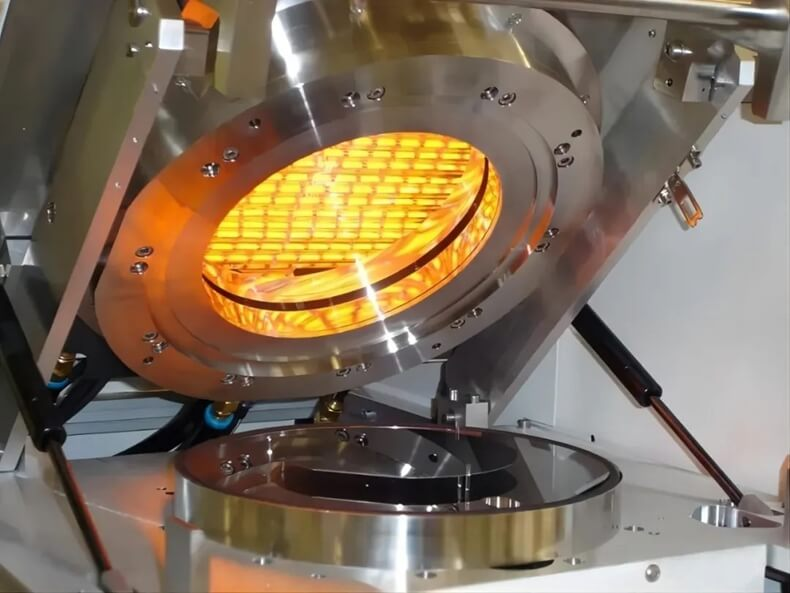
On the flexible display fab floor, a photoresist bake isn’t just “heating.” It’s a thermal budget call—temperature drift turns straight into dimensional error on the finished device. If your soft bake or hard bake profile slips even a little, you’ll see yield fall off fast on those fragile substrates.
What matters, technically
We built the drying lamp around controlled short-wave infrared, so it hits the wafer fast, non-contact, and keeps wafer-level uniformity inside ±0.1°C. The quartz optical path and low-outgassing fixtures keep particle generation at zero—because in Class 1–100 cleanrooms, one speck can kill a line. Photoresist temperature precision holds repeatable lot-to-lot, and the thermal profile stays stable even when you’re running 24/7.
Why it plays in flexible displays
Flexible substrates need thermal management that’s gentle, but still decisive, during lithography. The lamp gets you to target temperature quickly, holds it uniformly, then cools without overshoot. The payoff is consistent critical dimension control, fewer reworks, and cycle times you can count on. Energy use stays tight, too—precise duty-cycle control and high-efficiency drivers let you run cooler without sacrificing output.
The practical details
Installation comes down to matching the lamp footprint to the process chamber and confirming power and connector interfaces before integration. It’s compatible with standard fab automation, but you have to verify thermal coupling for each substrate stack to keep uniformity where it needs to be. Plan a short commissioning run to tune the profile for your specific photoresist and substrate stack. Once that’s dialed in, repeatability becomes the baseline.